
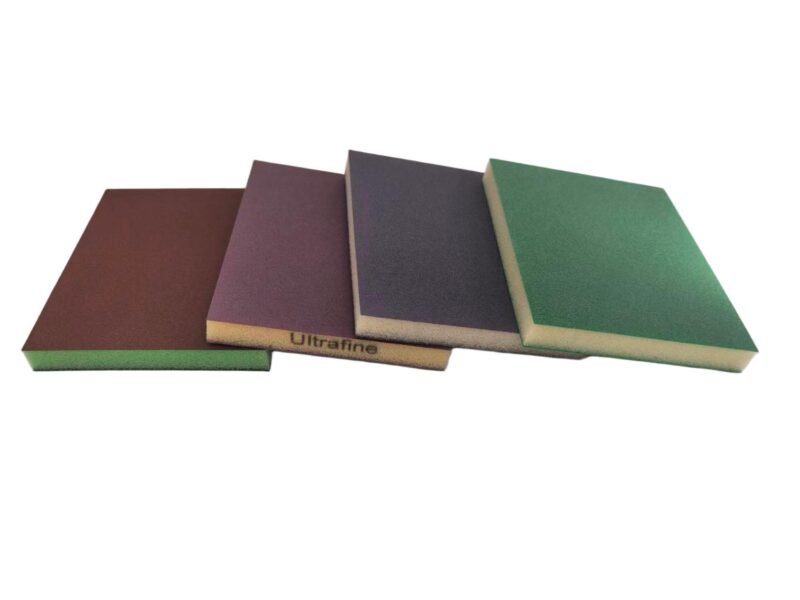
Foam Disc or Film Disc: Which One Should You Use?
Choosing an abrasive only by grit is a common mistake.
A P800 foam disc and a P800 film disc can behave very differently because the backing affects cutting power, pressure distribution and contact with the surface.
Film discs: when cutting and leveling matter
A polyester film backing is thin, strong and dimensionally stable. It transfers the movement of the sander more directly to the abrasive grain, providing a faster and more defined cutting action.
Foam discs: when conformability and control matters
The foam layer cushions the abrasive and helps distribute pressure more evenly. This allows the disc to follow curves, profiles and irregular surfaces while reducing localized over-sanding.
Automotive and woodworking applications
In automotive refinishing, film discs are commonly used for filler, primer and flat-panel sanding. Foam discs are better suited to bumpers, curved body panels, edges, blending areas and clear coat finishing.
In woodworking, film discs perform well on flat timber, MDF and cabinet panels. Foam discs provide better control on furniture profiles, molded edges, chair components and painted surfaces between coating layers.
The two products are not competitors. In many professional sanding processes, they work best together:
Film disc for cutting and leveling.
Foam disc for conformability and finish refinement.
TMILES supplies high-quality foam abrasive discs for automotive refinishing and woodworking, with multiple grit ranges, foam thicknesses and product structures. We also support customized sizes, hole patterns, hardness, colors and private-label packaging for distributors and professional abrasive brands.
The best abrasive is not simply the finest or most aggressive one—it is the product correctly matched to the surface and sanding step.